
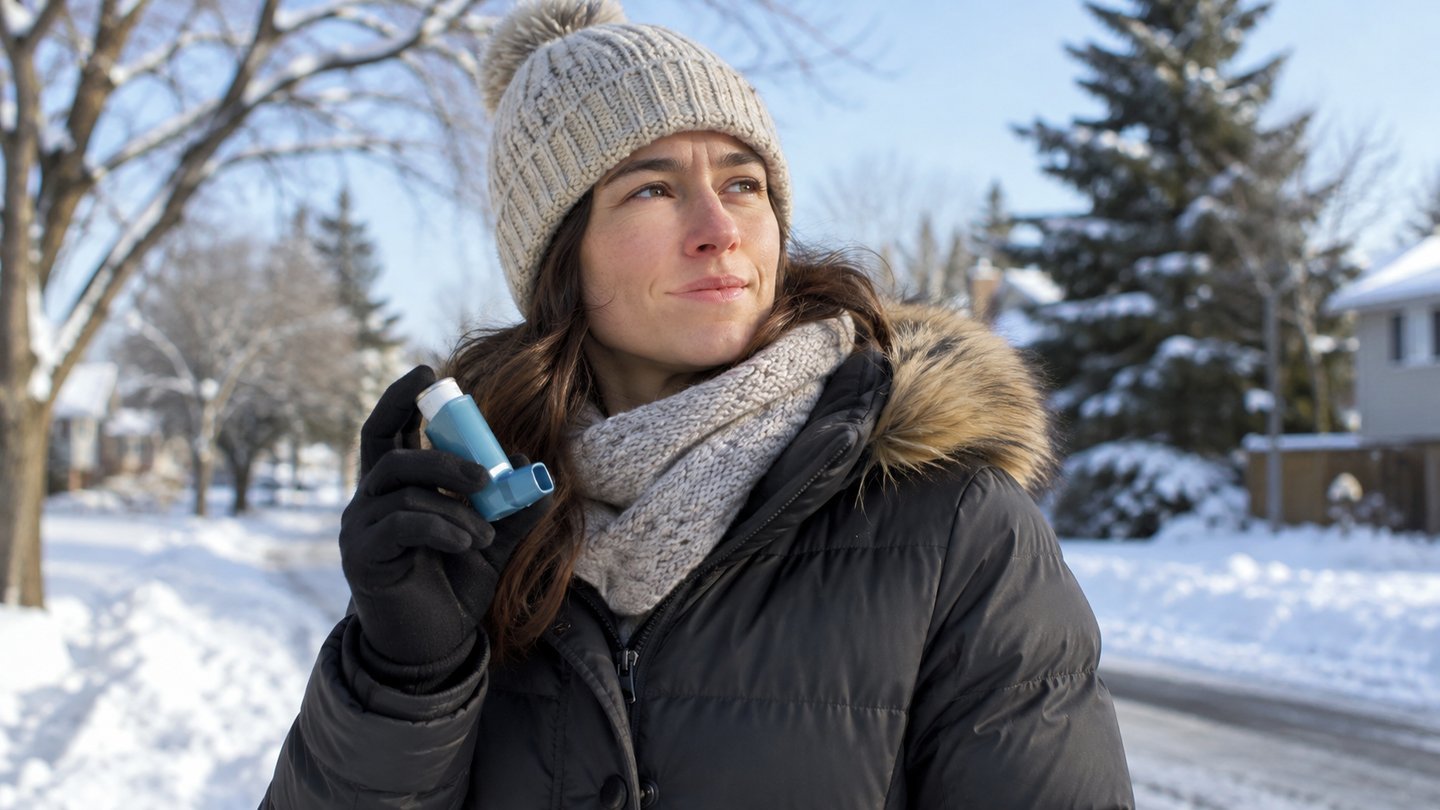
What Are Common Winter Asthma Symptoms?
Asthma symptoms vary from person to person. Winter symptoms may include:
- Recurring cough, especially at night or early in the morning
- Wheezing or a whistling sound while breathing
- Shortness of breath and chest tightness
- Breathing symptoms during or after outdoor exercise
- Sleep disruption or limits on usual activities
A winter cough does not automatically mean asthma. Respiratory infections, allergies and other conditions can cause similar symptoms. A healthcare provider may review your history and determine whether testing is needed.
Why Can Asthma Symptoms Worsen in Winter?
Cold and dry air
Cold, dry air can irritate sensitive airways. Breathing rapidly through the mouth during outdoor activity may increase symptoms because the air is less warmed and humidified.
Respiratory infections
Colds, influenza, COVID-19 and other infections can aggravate asthma. Fever, sore throat, congestion and body aches may suggest infection, although an infection and an asthma flare can occur together. Read our guide to winter respiratory infections.
Indoor triggers
Dust mites, mould, pet dander, tobacco or cannabis smoke, vaping aerosol, fireplace smoke, scented products and some cleaning fumes may trigger symptoms. Learn about seasonal allergies in Calgary.
Cold weather activity
Exercise in cold, dry air may trigger breathing symptoms. Discuss recurring exercise related symptoms with a healthcare provider. Avoid strenuous activity while breathing symptoms are active or worsening.
Is It Asthma or a Winter Cold?
A cold often causes congestion, a runny nose, sore throat and cough, sometimes with fever. Asthma may cause recurring or variable wheeze, chest tightness, breathlessness or a cough linked to triggers or nighttime symptoms. These patterns are clues, not a diagnosis.
A respiratory infection can trigger an asthma flare, so both may occur together. Explore allergies versus a cold for related symptom information. Arrange an assessment for new wheezing, repeated symptoms, disrupted sleep or activity, or a cough that does not improve as expected.
How to Reduce Winter Asthma Triggers
Follow your individual treatment plan. General steps may include:
- Follow your written asthma action plan and take prescribed medications as directed.
- Keep prescribed quick relief medication available and request a review of inhaler technique.
- Cover your nose and mouth with a scarf or suitable face covering in cold air to help warm inhaled air.
- Breathe through your nose when possible and warm up gradually before outdoor activity.
- Track symptoms and possible triggers, including weather, illness, exercise, smoke and scents.
- Reduce exposure to smoke, vaping aerosol and strong fragrances.
- Address dampness or mould and maintain appropriate ventilation.
- Check the Air Quality Health Index when outdoor air quality is a concern.
- Ask a healthcare provider which vaccinations are recommended for you.
Do not start, stop or change asthma medication based only on general online information.
Signs Your Asthma May Need Review
Consider a non emergency review if symptoms become more frequent, interrupt sleep or usual activities, require quick relief medication more often than your action plan recommends, or repeatedly worsen with cold air or infections. An assessment may also help if you are unsure about inhaler technique or do not have a written action plan.
North East Medical Clinic offers family practice and primary care for ongoing assessment and follow up, subject to clinical needs and physician availability. You can also read about asthma flare ups and their common triggers.
Winter Asthma Symptoms in Children
Children may cough, wheeze, breathe quickly, tire during activity or wake at night. Younger children may be unable to describe chest tightness. Cough or wheeze alone cannot confirm asthma.
Seek prompt assessment for worsening breathing, pulling inward around the ribs or neck, difficulty drinking, unusual sleepiness or symptoms that do not improve after the steps in the child’s action plan. Learn about pediatric care in Calgary and when a child’s cough needs care.
When Should You Seek Medical Care?
Seek advice for new wheezing, worsening cough or breathlessness, repeated nighttime symptoms, limits on activity or symptoms that remain difficult to control. Alberta Health Link is available at 811 if you are unsure where to seek care.
The clinic’s walk-in clinic in NE Calgary may assess appropriate non emergency concerns based on clinical priority and physician availability. Call ahead to confirm access. Complex adult respiratory concerns may require referral to internal medicine services or another service when appropriate.
When Is Asthma an Emergency?
Call 911 for severe trouble breathing, blue or grey lips or skin, marked difficulty speaking or staying awake, significant pulling in around the ribs or neck, or a rapid and serious decline. Emergency help is also needed if severe symptoms do not improve after the emergency steps in the person’s asthma action plan.
Severe asthma does not always cause loud wheezing. Do not wait for wheezing when someone is struggling to breathe. North East Medical Clinic does not provide emergency services.
Asthma Care in Northeast Calgary
North East Medical Clinic provides family medicine and walk-in care at 2790 32 Avenue NE, Calgary, AB T1Y 5S5. A physician may review symptoms, triggers, medication use and inhaler technique and determine whether testing, follow up or referral is appropriate. Services depend on clinical needs and physician availability.
For a non urgent concern, request an appointment or call (587) 393-6633 to ask about availability. Do not include sensitive health information in an online form.
Frequently Asked Questions
Can cold weather cause asthma symptoms?
Yes. Cold, dry air can irritate sensitive airways and contribute to cough, wheeze, chest tightness or shortness of breath. Cold weather alone does not establish an asthma diagnosis.
What do winter asthma symptoms feel like?
They may include recurring cough, wheeze, chest tightness and breathlessness during cold air exposure, exercise or respiratory illness. Other conditions can feel similar.
Can a cough be the only asthma symptom?
Some people with asthma mainly notice a cough, but coughing has many causes. Recurring or nighttime cough should be assessed.
Why can asthma feel worse at night in winter?
Nighttime symptoms may reflect asthma that is not well controlled or exposure to indoor triggers such as dust mites, mould, pet dander or smoke.
Can a cold or the flu trigger an asthma flare?
Yes. Respiratory infections may aggravate asthma symptoms. Follow your prescribed action plan and seek advice if symptoms worsen.
When are asthma symptoms an emergency?
Call 911 for severe trouble breathing, blue or grey lips or skin, difficulty speaking or staying awake, rapid decline or severe symptoms not improving after emergency action-plan steps.
Sources and Further Reading
- Asthma Canada: Winter asthma guidance and asthma education
- Canadian Lung Association: Asthma symptoms, triggers and cold weather breathing
- MyHealth Alberta: Asthma action plans and care instructions
- Alberta Health Services: Health Link 811
Request an appointment or call (587) 393-6633.
Medical information notice: This article provides general education and does not replace diagnosis, an asthma action plan or individualized treatment advice. Call 911 for emergencies. In Alberta, call 811 for health advice.