
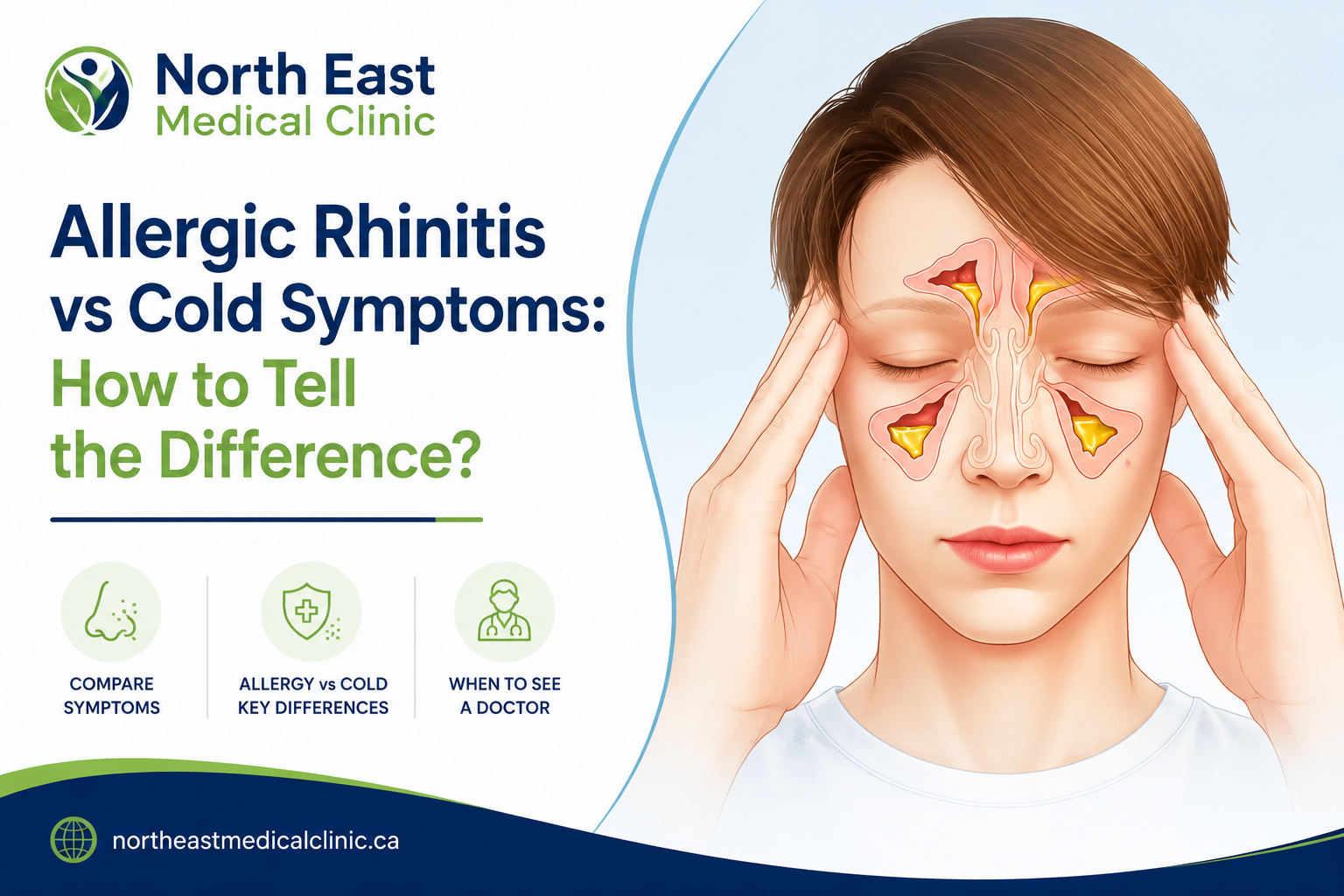
Trying to sort out allergic rhinitis vs cold symptoms can be frustrating, especially during spring in Calgary when sniffles are everywhere. A runny nose, congestion, and sneezing can happen with both conditions, which is why many people assume they have a cold when allergies may actually be the reason.
Understanding the difference matters because the pattern, expected timeline, and next steps are not the same. The right answer is not always obvious on day one, but a few symptom clues can make it easier to tell what may be going on.
What is allergic rhinitis?
Allergic rhinitis means the immune system is reacting to something in the air, such as pollen, dust, or pet dander. It commonly causes sneezing and a runny nose, and symptoms may happen only during certain seasons or continue through the year depending on the trigger.
Allergic rhinitis vs cold symptoms: the quick comparison
A cold is caused by a virus. Allergic rhinitis is caused by exposure to an allergen. That one difference explains why fevers and body aches point more toward a cold, while itchy eyes and repeated seasonal flare-ups point more toward allergies.
| Feature | Allergic Rhinitis | Common Cold |
| Cause | Immune reaction to allergens | Viral infection |
| Onset | Often soon after allergen exposure | Usually develops 1 to 3 days after exposure |
| Duration | May last as long as exposure continues | Often improves in 3 to 10 days |
| Itchy eyes | Common | Rare |
| Fever | Not typical | Can happen |
| Body aches | Not typical | More common |
| Sneezing | Common | Common |
| Sore throat | Less typical | More common |
| Cough | Sometimes from post-nasal drip | Common |
How timing can help
Timing is one of the most useful clues. If symptoms show up after yard work, a long walk, or spending time outdoors during pollen season, allergies become more likely. If symptoms appear a few days after being around someone who was sick, a cold becomes more likely.
Pattern also matters. A cold usually runs its course and improves. Allergies can linger for weeks or keep returning when the same trigger is present. If you notice the same congestion and sneezing every spring or fall, that repeat pattern is an important clue.
Symptoms that lean more toward allergies
Itchy, watery, or red eyes are classic allergy symptoms. So are repeated sneezing, an itchy nose, and clear runny discharge that keeps coming back. Some people also develop dark circles under the eyes or feel tired because congestion interferes with sleep.
A cough can happen with allergies too, especially if post-nasal drip is irritating the throat. That is why cough alone does not prove you have a cold. The whole symptom pattern is what matters.
Symptoms that lean more toward a cold
Fever, body aches, feeling generally unwell, and a sore throat are more often associated with a viral infection than with seasonal allergies. A cold may also bring thicker or more yellow nasal discharge, though mucus colour alone is not enough to make the diagnosis.
If symptoms are changing quickly over a few days, especially after exposure to someone who is sick, a cold becomes more likely than allergic rhinitis.
When the answer is not obvious
Sometimes patients have overlapping symptoms. A person with allergies can still catch a cold, and a person with a viral infection can still have a runny nose and congestion that feel similar to past allergy seasons. Children can be even harder to assess because they may not clearly describe itching, sinus pressure, or post-nasal drip.
That is when duration and context become important. If symptoms are dragging on, hurting sleep, or no longer responding the way they usually do, a medical review can help clarify what is most likely happening.
When to see a doctor
Book a visit if symptoms last longer than expected, if it is hard to tell whether you are dealing with allergic rhinitis vs cold symptoms, or if you have wheezing, asthma, repeated sinus issues, or side effects from self-treatment. A physician can review your history, assess symptoms, and discuss next steps that fit your situation.
Learn more about walk-in clinic services in NE Calgary.
FAQ
Can allergies cause a sore throat?
They can sometimes cause throat irritation when post-nasal drip is present, but a true sore throat is still more often associated with a cold or another infection.
Can a cold trigger allergy symptoms?
A cold does not cause allergies, but it can make the nose and throat feel more irritated, which may make symptoms seem more intense if allergies are already present.
Is itchy eyes the biggest clue?
It is one of the strongest clues in favour of allergies, especially when it appears with sneezing and clear nasal symptoms during a known allergy season.
Final thoughts
When you compare allergic rhinitis vs cold symptoms, the pattern usually tells the story: allergies often itch and linger, while colds more often bring fever, aches, or a short-lived viral course. If the difference still is not clear, a medical assessment can help you avoid guessing and decide what follow-up makes sense.
Compliance Disclaimer: Services provided by physicians licensed with the College of Physicians & Surgeons of Alberta. This content is for informational purposes only.