
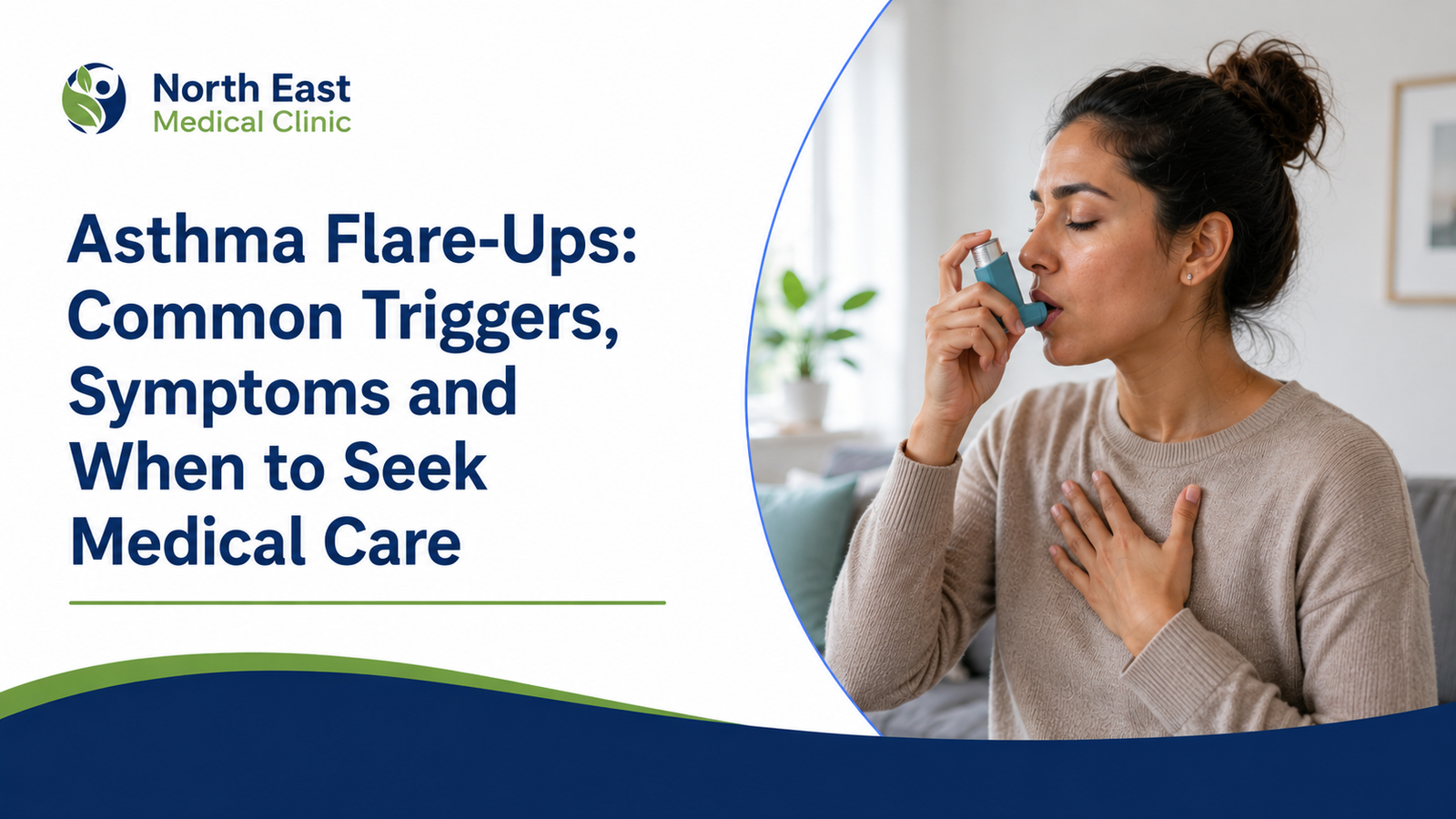
An asthma flare-up is a period when asthma symptoms become worse than usual. It may also be called an asthma attack, acute asthma episode or exacerbation.
During a flare-up, the muscles surrounding the airways can tighten. The airway lining may also become inflamed, and additional mucus may interfere with airflow. These changes can make it harder to move air in and out of the lungs.
Not every flare-up begins as a sudden emergency. Some develop gradually, with warning signs such as nighttime coughing, reduced exercise tolerance or needing reliever medication more frequently. Recognizing these changes early may allow a person to follow their Asthma Action Plan and seek care before symptoms become severe.
Common Symptoms of an Asthma Flare-Up
Asthma symptoms differ from person to person. Common signs of an asthma flare-up include:
- coughing, especially at night or early in the morning;
- wheezing or a whistling sound while breathing;
- chest tightness or pressure;
- shortness of breath;
- rapid or shallow breathing;
- difficulty taking a deep breath;
- waking during the night because of asthma symptoms;
- reduced ability to exercise or complete usual activities;
- needing prescribed reliever medication more often; or
- a lower peak flow reading than the person’s usual value, if peak flow monitoring is part of their care plan.
A person may experience one or several of these symptoms. Wheezing is not always present, so its absence does not necessarily mean that breathing difficulty is mild.
Early Warning Signs That Asthma May Be Getting Worse
Asthma flare-ups sometimes begin with subtle changes. Early signs may include:
- coughing more than usual;
- mild chest tightness;
- becoming short of breath during routine activity;
- waking at night because of coughing or breathing difficulty;
- having trouble exercising at the usual level;
- missing school, work or activities because of symptoms;
- experiencing symptoms more than twice a week; or
- relying on reliever medication more often than recommended.
Frequent symptoms should not automatically be accepted as a normal part of living with asthma. They may indicate that asthma is not well controlled or that the current treatment plan needs to be reviewed.
A family physician can assess symptom patterns, medication use and possible triggers. North East Medical Clinic provides family practice and primary care services in Northeast Calgary, based on physician availability and clinical assessment.
Common Asthma Flare-Up Triggers
A trigger is something that causes or worsens asthma symptoms. Each person’s triggers may be different, and more than one trigger can contribute to the same flare-up.
Respiratory Infections
Colds, influenza and other respiratory infections are common asthma triggers. Infection-related symptoms can irritate the airways and may cause asthma to worsen over several days.
Speak with a health professional if a respiratory illness is accompanied by increasing wheezing, shortness of breath, nighttime symptoms or reduced response to prescribed reliever medication.
Tobacco, Cannabis and Wildfire Smoke
Smoke can irritate the airways and trigger coughing, wheezing and breathing difficulty. Possible sources include:
- cigarettes and second-hand tobacco smoke;
- cannabis smoke;
- vaping aerosols;
- fireplaces and wood-burning stoves; and
- wildfire smoke.
Wildfire smoke can affect air quality in Calgary and throughout Alberta. People with asthma may need to reduce outdoor exposure when smoke levels are high and follow the instructions in their Asthma Action Plan.
Cold Air and Weather Changes
Cold, dry air can trigger asthma symptoms in some people. Rapid weather changes, heat and humidity may also affect breathing.
Covering the nose and mouth with a loose scarf in cold weather may help warm the air before it reaches the lungs. People whose symptoms regularly worsen during Calgary winters should discuss prevention strategies with a health professional.
Pollen, Mould and Outdoor Allergens
Trees, grasses, weeds and mould can release allergens that worsen asthma in people with allergic triggers. Pollen levels vary by season, while outdoor mould may increase in damp conditions.
A symptom diary can help identify whether flare-ups regularly occur at a particular time of year.
Dust Mites and Indoor Mould
Dust mites are microscopic organisms commonly found in bedding, upholstered furniture and carpets. Indoor mould may grow in damp areas with water damage or poor ventilation.
Not every person with asthma is sensitive to these triggers. Before making expensive changes to a home, discuss suspected allergens with a health professional.
Animals and Pet Allergens
Proteins found in animal dander, saliva and urine can trigger asthma symptoms in some people. Symptoms may occur around pets or remain after an animal has left because allergens can stay on clothing, furniture and other surfaces.
An allergy assessment may help determine whether an animal is contributing to symptoms.
Exercise
Physical activity can cause coughing, wheezing or chest tightness in some people, particularly when asthma is not well controlled or the air is cold and dry.
Asthma should not automatically prevent someone from being active. A health professional can review symptom control, inhaler technique and the person’s treatment plan.
Air Pollution, Fumes and Strong Scents
Vehicle exhaust, smog, workplace dust, cleaning chemicals, perfumes, scented products and other fumes can irritate sensitive airways.
People who notice symptoms mainly at work should document when symptoms occur and discuss the pattern with a health professional. Occupational asthma may require a more detailed assessment.
Strong Emotions and Stress
Laughing, crying, anxiety and intense stress can change breathing patterns and trigger symptoms in some people. This does not mean that asthma is “all in someone’s head.” Asthma is a physical airway condition, although emotions may contribute to symptoms.
Certain Medications
Some medications can worsen asthma in certain individuals. These may include aspirin or other anti-inflammatory medicines and some medicines used for heart conditions or blood pressure.
Do not stop a prescribed medication on your own. Ask a physician or pharmacist to review possible medication triggers and recommend appropriate next steps.
Asthma Flare-Ups in Children
Children may not always describe chest tightness or shortness of breath clearly. Possible warning signs include:
- persistent coughing, particularly at night;
- wheezing;
- faster or more difficult breathing;
- tiring during play;
- avoiding normal physical activity;
- waking because of coughing;
- difficulty keeping up with other children; or
- needing reliever medication more often than directed.
Some children describe chest tightness as chest or stomach discomfort. Parents and caregivers should follow the child’s Asthma Action Plan and seek medical advice when symptoms are changing or becoming more frequent.
North East Medical Clinic’s paediatric care services include assessment of common and ongoing childhood health concerns, based on clinical need and physician availability.
What to Do During an Asthma Flare-Up
The person’s written Asthma Action Plan should provide individualized instructions. In general:
- Stop the activity that may be contributing to the symptoms.
- Sit upright and try to remain calm. Do not lie flat when breathing is difficult.
- Move away from smoke, fumes, allergens or other suspected triggers when it is safe to do so.
- Use prescribed reliever medication exactly as directed in the Asthma Action Plan.
- Use a spacer if it has been recommended for the inhaler.
- Monitor whether breathing, speaking and alertness are improving.
- Call 911 if symptoms are severe, rapidly worsening or not improving after prescribed rescue medication.
Do not use someone else’s inhaler or take more medication than directed unless an emergency operator or health professional provides instructions.
When to Seek Medical Care for Asthma Symptoms
Book a Medical Appointment
Arrange an appointment if:
- asthma symptoms occur more than twice a week;
- coughing or wheezing regularly interrupts sleep;
- symptoms limit exercise, school, work or daily activities;
- reliever medication is needed more often than recommended;
- the current inhaler seems difficult to use;
- symptoms repeatedly occur around the same trigger; or
- the person does not have a written Asthma Action Plan.
These patterns may indicate that asthma control or inhaler technique should be reviewed.
Seek Prompt or Same-Day Assessment
Prompt medical assessment may be appropriate when:
- symptoms are becoming noticeably worse over hours or days;
- breathing is more difficult than usual;
- prescribed reliever medication provides less relief or relief does not last;
- the person has recently experienced an asthma attack;
- a respiratory infection is causing increasing asthma symptoms; or
- the person is unsure whether the symptoms can be managed safely at home.
North East Medical Clinic offers walk-in medical care for eligible non-emergency concerns, based on clinical appropriateness and physician availability. Call ahead to confirm access.
A walk-in clinic is not a replacement for emergency care when severe breathing symptoms are present.
When Is an Asthma Flare-Up an Emergency?
An asthma attack can become life-threatening. Call 911 immediately if the person:
- is struggling to breathe or is short of breath at rest;
- cannot speak in full sentences because of breathing difficulty;
- has blue or grey lips or fingernails;
- is becoming faint, confused, unusually drowsy or difficult to wake;
- has severe chest tightness or rapidly worsening symptoms;
- cannot walk or complete basic activity because of breathlessness;
- does not have access to prescribed rescue medication; or
- does not improve after using rescue medication as directed.
Follow the emergency operator’s instructions while waiting for help. Keep the person sitting upright and continue following their Asthma Action Plan unless emergency personnel advise otherwise.
What to Do After an Asthma Flare-Up
Follow-up is important even if the person feels better. According to Asthma Canada, an asthma attack may indicate that the condition is not adequately controlled.
A follow-up visit may include:
- reviewing what happened before and during the flare-up;
- checking how often symptoms and reliever use occur;
- reviewing controller medication use;
- checking inhaler and spacer technique;
- discussing possible triggers;
- assessing whether lung function testing is appropriate; and
- creating or updating a written Asthma Action Plan.
Continue prescribed medication unless a health professional advises otherwise.
How to Help Prevent Future Asthma Flare-Ups
Not every flare-up can be prevented, but several measures may reduce risk:
- Take controller medication as prescribed, including when symptoms are absent.
- Keep prescribed reliever medication accessible.
- Learn and practise correct inhaler and spacer technique.
- Maintain an up-to-date Asthma Action Plan.
- Track symptoms, reliever use and suspected triggers.
- Avoid tobacco smoke and vaping aerosols.
- Monitor local air-quality and wildfire-smoke conditions.
- Reduce exposure to confirmed allergens when reasonably possible.
- Discuss symptoms that occur during exercise rather than avoiding activity without medical guidance.
- Attend recommended follow-up appointments.
Asthma management should be individualized. A strategy that helps one person may not be appropriate for another.
Asthma Assessment in Northeast Calgary
Asthma flare-ups can range from mild changes in symptoms to a medical emergency. Increasing cough, wheezing, nighttime symptoms or reliever use should be reviewed rather than accepted as an unavoidable part of asthma.
North East Medical Clinic provides primary care and walk-in assessment for non-emergency medical concerns in Northeast Calgary. Services depend on physician availability, clinical assessment and the patient’s needs.
Request an appointment or call (587) 393-6633 to confirm availability.
This article provides general educational information and does not replace medical advice, diagnosis, an Asthma Action Plan or emergency care. Call 911 if someone is having severe trouble breathing or shows other signs of a serious asthma attack.
Frequently Asked Questions
What does an asthma flare-up feel like?
An asthma flare-up may cause coughing, wheezing, chest tightness or shortness of breath. A person may also wake at night, have difficulty exercising or need prescribed reliever medication more often.
What are the most common asthma flare-up triggers?
Common triggers include respiratory infections, smoke, cold air, pollen, dust mites, mould, animal allergens, air pollution, exercise, chemical fumes and strong scents. Triggers vary between individuals.
How long can an asthma flare-up last?
A flare-up may be brief or continue for several days. The duration depends on the trigger, asthma control, treatment response and other health factors. Persistent or worsening symptoms require medical assessment.
Can asthma flare-ups happen without wheezing?
Yes. Some people mainly experience coughing, chest tightness or shortness of breath. Severe airflow restriction may not always produce obvious wheezing, so other signs of breathing difficulty should not be ignored.
When should I go to a walk-in clinic for asthma?
A walk-in clinic may be appropriate for worsening but non-emergency symptoms, such as increasing cough, wheezing or reliever use. Call 911 for severe breathing difficulty, trouble speaking, blue or grey lips, confusion, faintness or symptoms that do not improve after prescribed rescue medication.
Should I see a doctor after an asthma attack if I feel better?
Yes. Follow-up can help identify the trigger, review medications and inhaler technique, assess asthma control and update the person’s Asthma Action Plan.