
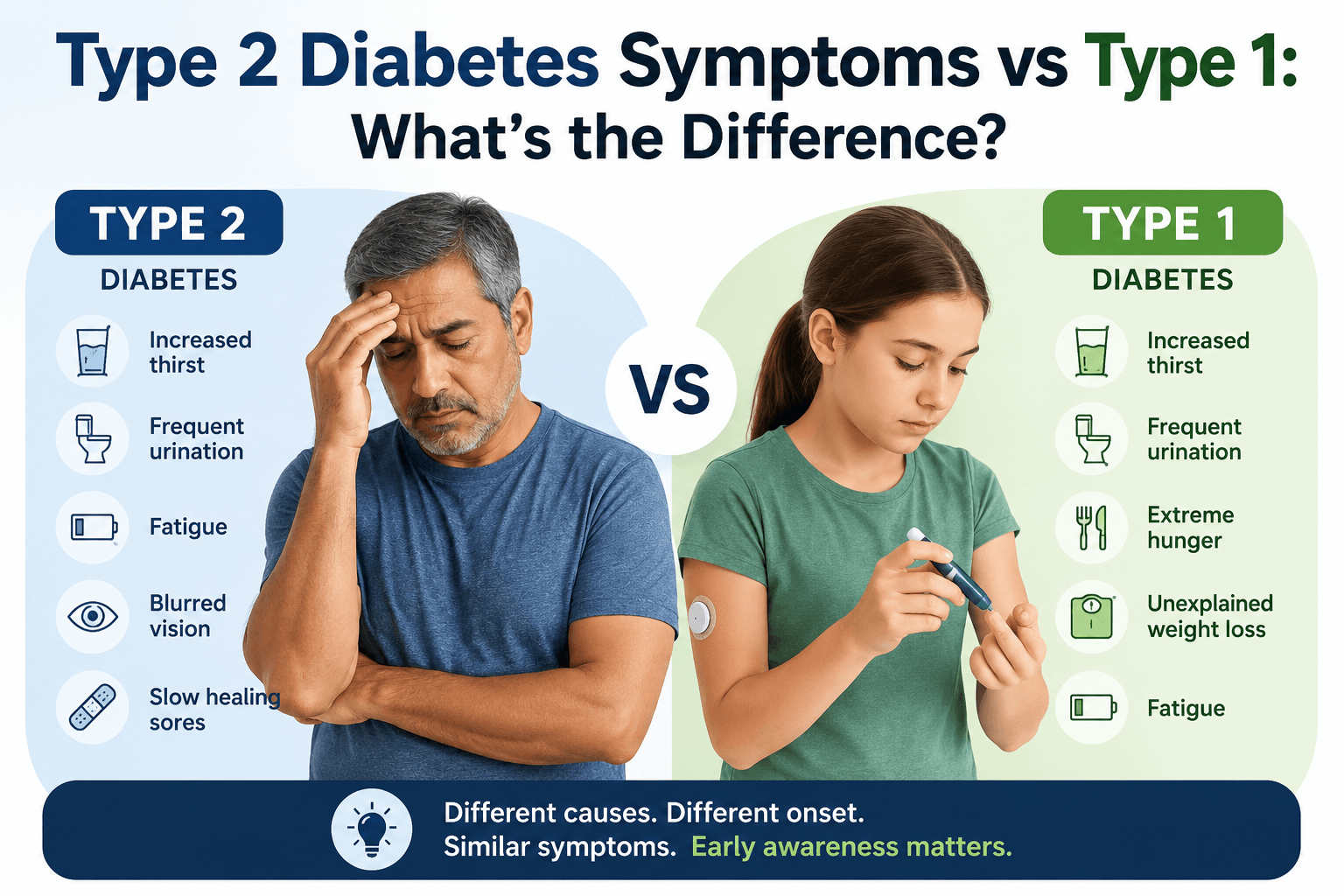
Type 2 Diabetes Symptoms vs Type 1 is an important topic because both types of diabetes can cause similar warning signs, including increased thirst, frequent urination, fatigue, blurry vision, and unexplained weight changes. The main difference is how symptoms usually develop: type 1 diabetes often comes on quickly, while type 2 diabetes often develops slowly and may not cause obvious symptoms at first.
Because symptoms can overlap, you cannot reliably tell the type of diabetes based on symptoms alone. A doctor can assess your symptoms and order blood tests to check your blood sugar and determine what follow-up care may be needed.
North East Medical Clinic in Northeast Calgary provides family medicine and walk-in medical care for non-emergency concerns, including diabetes screening, symptom assessment, and ongoing health monitoring.
What Is Type 1 Diabetes?
Type 1 diabetes is an autoimmune condition. This means the immune system attacks the insulin-producing cells in the pancreas. Insulin is a hormone that helps move sugar from the blood into the body’s cells for energy.
Type 1 diabetes is often diagnosed in children, teens, or young adults, but it can occur at any age. Symptoms may develop over days or weeks and can become serious if not assessed and treated promptly.
What Is Type 2 Diabetes?
Type 2 diabetes happens when the body does not use insulin effectively or does not make enough insulin to keep blood sugar in a healthy range. This is often called insulin resistance.
Type 2 diabetes is more common in adults, but it can also affect younger people. Symptoms may develop gradually, and some people do not notice symptoms for years. This is why screening can be important, especially for people with risk factors.
Common Symptoms of Type 1 and Type 2 Diabetes
Both type 1 and type 2 diabetes may cause symptoms such as:
- Feeling very thirsty
- Urinating more often than usual
- Feeling unusually tired or weak
- Blurry vision
- Feeling hungrier than usual
- Unexplained weight loss
- Slow-healing cuts or sores
- Frequent infections
- Tingling or numbness in the hands or feet
Some people with type 2 diabetes may have no clear symptoms at first. Others may notice mild symptoms that are easy to dismiss.
Type 2 Diabetes Symptoms vs Type 1: Key Differences
When comparing Type 2 Diabetes Symptoms vs Type 1, timing is one of the most important differences. Type 1 symptoms often appear quickly, while type 2 symptoms may develop slowly or go unnoticed for a long time.
| Feature | Type 1 Diabetes | Type 2 Diabetes |
|---|---|---|
| Usual cause | Autoimmune loss of insulin-producing cells | Insulin resistance and reduced insulin function |
| Typical onset | Often sudden | Often gradual |
| Common age at diagnosis | More common in children, teens, and young adults, but possible at any age | More common in adults, but can occur in youth |
| Weight loss | Can happen quickly | May happen, but not always |
| Symptoms at first | Often noticeable and faster-moving | May be mild, slow, or absent |
| Insulin need | Insulin is required | Treatment varies and may include lifestyle changes, medications, and sometimes insulin |
Symptoms That May Suggest Type 1 Diabetes
Symptoms that develop quickly may raise concern for type 1 diabetes, especially if they include:
- Sudden increased thirst
- Frequent urination
- Unexplained weight loss
- Extreme hunger
- Fatigue or weakness
- Blurry vision
- Irritability or mood changes
Type 1 diabetes can sometimes lead to diabetic ketoacidosis, a serious medical emergency. Seek urgent care if symptoms include vomiting, abdominal pain, rapid breathing, confusion, fruity-smelling breath, severe weakness, or signs of dehydration.
Symptoms That May Suggest Type 2 Diabetes
Type 2 diabetes symptoms may be slower and less obvious. They may include:
- Increased thirst
- Frequent urination, especially at night
- Fatigue
- Blurry vision
- Slow-healing cuts or sores
- Frequent skin, gum, urinary, or yeast infections
- Tingling or numbness in the hands or feet
- Darker, thicker skin patches, often around the neck or underarms
These symptoms do not confirm type 2 diabetes, but they are a reason to speak with a doctor and ask whether blood sugar testing is appropriate.
Why Symptoms Alone Cannot Confirm the Type of Diabetes
Even though Type 2 Diabetes Symptoms vs Type 1 comparisons can help people understand common patterns, symptoms alone are not enough for diagnosis. Some adults with type 1 diabetes may develop symptoms more slowly, and some people with type 2 diabetes may have symptoms that feel sudden or severe.
Blood testing and medical assessment are the safest way to understand what may be happening. A healthcare provider may also consider age, family history, medications, weight changes, other health conditions, and whether symptoms are getting worse.
When to See a Doctor
Book a medical appointment if you notice symptoms such as increased thirst, frequent urination, unexplained weight changes, fatigue, blurry vision, slow-healing wounds, or repeated infections.
You may also want to ask about diabetes screening if you have risk factors such as:
- A family history of diabetes
- Previous gestational diabetes
- High blood pressure
- High cholesterol
- A history of prediabetes
- Certain ethnic backgrounds associated with higher diabetes risk
- Weight or metabolic health concerns
Screening recommendations can vary depending on age, medical history, and risk factors. A healthcare provider can help decide what is appropriate for you.
How Doctors Check for Diabetes
A doctor may recommend blood tests such as:
- A1C test
- Fasting blood glucose
- Random blood glucose
- Oral glucose tolerance test in some cases
If the type of diabetes is unclear, additional testing may be needed. Your doctor may also review symptoms, medications, family history, and other health conditions.
Read our guide to Canadian normal blood sugar levels for adults.Learn more about our diabetes and weight management services in Calgary.
How North East Medical Clinic Can Help
If you are in Northeast Calgary and are concerned about possible diabetes symptoms, North East Medical Clinic can help with an initial assessment, blood work requests when appropriate, and follow-up care planning.
Diabetes care is individualized. A doctor can help explain your results, discuss next steps, and recommend monitoring or referral when needed.
For severe symptoms or signs of a medical emergency, call 911 or go to the nearest emergency department.
FAQ
Are Type 2 Diabetes Symptoms vs Type 1 symptoms the same?
They can be similar. Both may cause thirst, frequent urination, fatigue, blurry vision, and weight changes. Type 1 symptoms often develop faster, while type 2 symptoms may develop slowly or be mild at first.
Can adults get type 1 diabetes?
Yes. Type 1 diabetes is more common in younger people, but adults can develop it too. Testing is needed to understand the type of diabetes and the right treatment approach.
Can type 2 diabetes have no symptoms?
Yes. Some people with type 2 diabetes do not notice symptoms for a long time. Screening can help detect high blood sugar before symptoms become obvious.
Is unexplained weight loss a diabetes symptom?
It can be. Unexplained weight loss may occur with diabetes, especially when blood sugar is high. It should be assessed by a healthcare provider.
When should diabetes symptoms be treated as urgent?
Seek urgent medical care for vomiting, severe weakness, confusion, rapid breathing, dehydration, abdominal pain, or fruity-smelling breath, especially with increased thirst and frequent urination.