
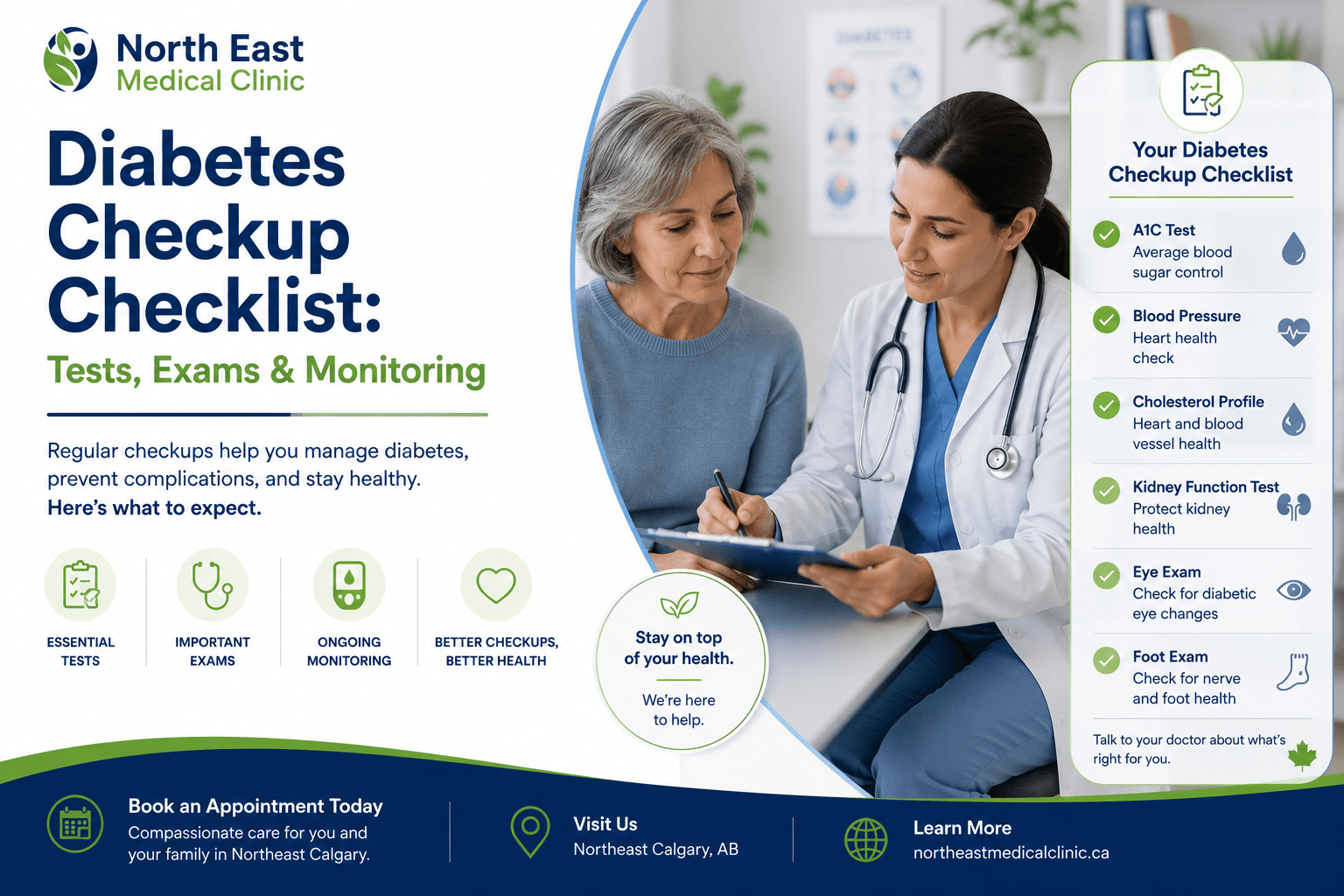
A regular diabetes checkup helps you and your healthcare provider monitor blood sugar, review medications, screen for complications, and adjust your care plan when needed. For adults living with diabetes in Northeast Calgary, routine follow-up can support safer, more consistent diabetes management over time.
This checklist is general educational information. Your personal schedule may be different based on your diabetes type, medications, age, pregnancy status, other health conditions, and your provider’s recommendations.
Why a Diabetes Checkup Matters
Diabetes can affect more than blood sugar. Over time, high blood glucose may increase the risk of complications involving the heart, kidneys, eyes, nerves, feet, and blood vessels. Canada.ca notes that diabetes care may include lifestyle changes, medication, blood sugar monitoring, and prevention of complications.
A diabetes checkup gives your healthcare provider a chance to look at the full picture, not just one glucose reading.
At North East Medical Clinic, patients in NE Calgary can access family practice and primary care, diabetes and weight management support, and dietitian and nutrition counselling based on clinical need and appointment availability.
Diabetes Checkup Checklist for Adults
Use this checklist to prepare for your next diabetes checkup.
1. A1C Blood Test
The A1C test shows your average blood sugar over about the past 2 to 3 months. It is commonly used to monitor diabetes control and guide treatment decisions.
MyHealth Alberta notes that A1C testing may be done every 3 to 6 months, depending on your situation. Many adults with diabetes have a general A1C target below 7%, but targets should be individualized by a healthcare provider.
Ask your provider:
- What is my current A1C?
- What target is appropriate for me?
- Do my medications or lifestyle plan need adjustment?
2. Blood Pressure Check
Blood pressure is an important part of diabetes care because diabetes and high blood pressure can both affect the heart, kidneys, eyes, and blood vessels.
Your provider may check your blood pressure at routine diabetes visits and discuss whether your numbers are within your personal target range.
Ask your provider:
- Is my blood pressure in a healthy range for me?
- Do I need home blood pressure monitoring?
- Are my medications still appropriate?
3. Cholesterol and Heart Health Review
People with diabetes may have a higher risk of cardiovascular disease. A cholesterol test can help assess risk and guide prevention planning.
Your diabetes checkup may include a lipid panel, which measures cholesterol and triglycerides. Your provider may also review smoking status, physical activity, family history, blood pressure, and other heart-health factors.
Ask your provider:
- When was my last cholesterol test?
- Do I need medication for cholesterol or heart-risk reduction?
- What lifestyle steps are realistic for me?
4. Kidney Function Tests
Diabetes can affect the kidneys, sometimes before symptoms appear. Kidney screening may include a blood test for kidney function and a urine test to check for protein.
Diabetes Canada guidance highlights kidney screening as an important part of diabetes care. Your provider can explain how often you need testing based on your results and risk factors.
Ask your provider:
- Have my kidneys been checked this year?
- Do I need a urine albumin-to-creatinine ratio test?
- Are my blood pressure and blood sugar targets helping protect my kidneys?
5. Eye Exam
Diabetes can affect the small blood vessels in the eyes. A diabetes eye health exam can help detect diabetic retinopathy and other concerns early, sometimes before vision changes are noticeable.
Alberta Health Services notes that early detection and treatment are important for preventing vision loss from diabetic retinopathy.
Ask your provider:
- Am I due for a diabetes eye exam?
- Should I see an optometrist or ophthalmologist?
- How often should I repeat the exam?
6. Foot Exam
A foot exam helps check for nerve changes, circulation issues, skin breakdown, infection risk, and wounds that may be slower to heal.
Your provider may examine your feet, ask about numbness or tingling, and discuss footwear, skin care, and when to seek care for cuts or sores.
Ask your provider:
- Do I have any signs of nerve or circulation changes?
- How should I care for my feet at home?
- What symptoms should I report right away?
7. Medication Review
Bring an updated list of medications, supplements, insulin doses, glucose devices, and any side effects. Your provider may review whether your medications are helping, whether doses need adjustment, or whether additional support is needed.
Ask your provider:
- Should I continue my current medications?
- Could any medication cause low blood sugar?
- What should I do if I miss a dose?
8. Blood Sugar Monitoring Review
If you check your blood sugar at home, bring your meter, logbook, or app records. If you use a continuous glucose monitor, your provider may review patterns such as overnight lows, after-meal highs, or frequent variability.
If you are unsure what your readings mean, see North East Medical Clinic’s related blog: Canadian Normal Blood Sugar Levels: A Guide for Adults.
Ask your provider:
- When should I check my blood sugar?
- What readings are too high or too low for me?
- What should I do if my results are outside my target range?
9. Nutrition and Weight Management Support
Food choices, meal timing, physical activity, sleep, stress, and weight changes can all affect diabetes management. Nutrition guidance should be realistic and tailored to your culture, schedule, medications, and health goals.
North East Medical Clinic offers dietitian and nutrition counselling and diabetes and weight management services for patients who may benefit from structured support.
Ask your provider:
- Would a dietitian referral help me?
- Are my meal patterns affecting my blood sugar?
- What lifestyle changes are most important for my situation?
How Often Should You Have a Diabetes Checkup?
Many adults with diabetes need follow-up every 3 to 6 months, especially for A1C testing and medication review. Some tests, such as eye exams, foot exams, cholesterol testing, and kidney screening, may be recommended yearly or on a schedule set by your provider.
You may need more frequent visits if:
- Your blood sugar is often above or below target
- Your medications recently changed
- You started insulin or another injectable medication
- You have kidney, eye, nerve, heart, or foot concerns
- You are pregnant or planning pregnancy
- You have symptoms that need medical review
When to Book a Diabetes Checkup in NE Calgary
Consider booking a diabetes checkup if you are due for lab work, have not reviewed your diabetes care plan recently, or are noticing changes in your readings, energy, vision, urination, thirst, weight, feet, or medication tolerance.
Patients in NE Calgary can use North East Medical Clinic’s booking page for appointment inquiries. For non-emergency concerns, the clinic also provides walk-in clinic services based on physician availability and clinical assessment.
If you have severe symptoms, chest pain, difficulty breathing, loss of consciousness, signs of stroke, severe confusion, or another emergency concern, call 911 or go to the nearest emergency department.
FAQ
What is included in a diabetes checkup?
A diabetes checkup may include A1C testing, blood pressure measurement, cholesterol testing, kidney screening, medication review, foot assessment, eye exam planning, and a review of blood sugar patterns.
How often should adults with diabetes get an A1C test?
A1C testing is commonly done every 3 to 6 months, depending on your diabetes control, treatment plan, and provider’s recommendation.
Do I need an eye exam if my vision seems normal?
Yes, many diabetes-related eye changes may not cause symptoms at first. Your provider can advise how often you should have a diabetes eye health exam.
Should I bring my glucose meter to my diabetes checkup?
Yes. Bringing your glucose meter, app records, or blood sugar log can help your provider review patterns and adjust your care plan if needed.
Where can I book a diabetes checkup in NE Calgary?
You can contact North East Medical Clinic to ask about appointment availability for diabetes care, primary care, or related follow-up services.