
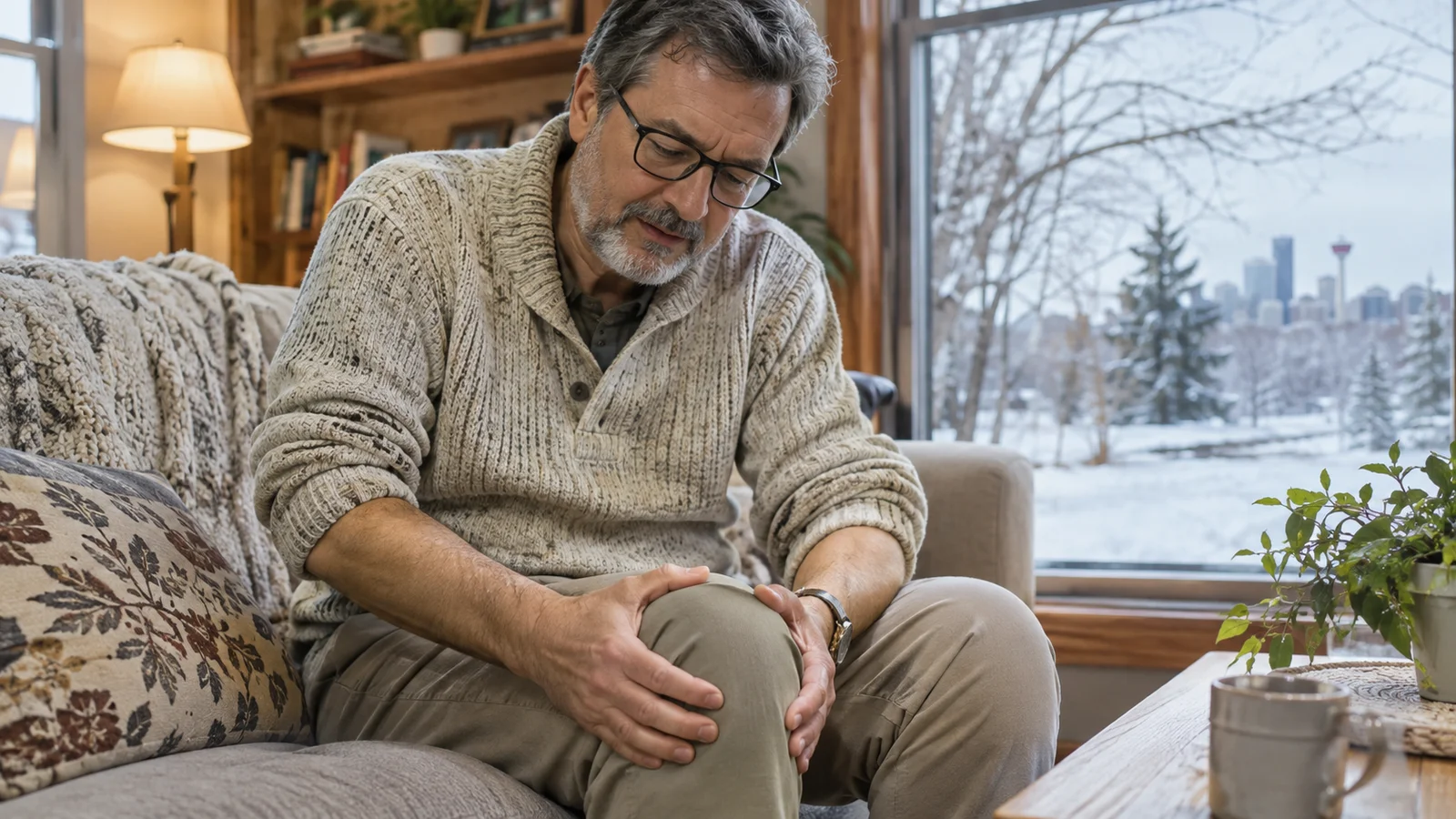
Joint pain in cold weather is a common concern during Canadian winters. Some people notice more stiffness or discomfort in their knees, hands, hips, or shoulders when temperatures drop. Although research has not established that cold weather directly causes arthritis or joint pain, existing joint conditions, reduced activity, and winter injuries may contribute to symptoms.
If pain persists or affects your daily activities, a clinician can help identify possible causes. North East Medical Clinic offers Family Practice & Primary Care for assessment and follow up according to clinical need and physician availability.
Can Cold Weather Cause Joint Pain?
Some people report more discomfort during cold or damp weather, but research findings are mixed. Studies have examined temperature, humidity, and barometric pressure without establishing a consistent cause and effect relationship. Cold weather does not itself cause arthritis. Pain should not automatically be attributed to the weather, particularly when it is new or accompanied by swelling.
Why Might Joints Feel Stiffer in Winter?
Reduced activity
Shorter days, icy sidewalks, and spending more time indoors may reduce movement. Inactivity can contribute to stiffness in some people. Gentle activity suited to your ability may help maintain joint mobility.
Existing joint conditions
Osteoarthritis, rheumatoid arthritis, and gout can cause pain or stiffness, but they have different underlying causes. Symptoms may fluctuate throughout the year. Persistent symptoms warrant individualized assessment rather than self diagnosis.
Strains and winter injuries
Slips on ice, shovelling snow, or unfamiliar exercise can strain muscles and joints. For minor non emergency sprains or strains, the clinic’s Walk-In Clinic may provide an initial assessment, depending on physician availability and clinical priority.
Changes in air pressure
Some individuals associate joint discomfort with changing barometric pressure or humidity. The evidence remains inconsistent, so these weather changes should not be presented as proven causes of pain.
Symptoms Worth Paying Attention To
- Aching or stiffness in one or more joints
- Reduced range of motion or pain during movement
- Swelling, warmth, redness, or tenderness
- Symptoms that interrupt sleep, walking, work, or daily routines
New warmth, marked swelling, or sudden severe pain should not be assumed to be an ordinary winter symptom.
Ways to Manage Mild Joint Discomfort in Winter
Stay gently active
Consider comfortable activities such as indoor walking, swimming, or gentle mobility exercises. Increase gradually and stop or modify activities that cause significant pain. Ask a clinician or physiotherapist for advice if you have an injury or known joint condition.
Keep warm and prevent falls
Wear appropriate layers and footwear with traction. Plan for icy conditions, and take breaks during physically demanding winter tasks.
Use heat or cold cautiously
Warm showers or compresses may soothe stiffness; a wrapped cold pack may help some types of soreness or swelling. Avoid applying extreme temperatures directly to the skin. Do not use heat on a hot or swollen joint. Seek individualized advice if you have reduced sensation or circulation problems.
Review medicines when needed
Over the counter pain relievers are not suitable for everyone. Speak with a pharmacist or healthcare professional about interactions, other health conditions, and safe use. For ongoing symptoms or medication reviews, Family Practice & Primary Care may support continuity of care.
When Should You See a Doctor for Joint Pain?
Book a medical assessment if pain is persistent, recurring, worsening, follows an injury, or interferes with daily life. A doctor may review your history, examine the affected joint, and recommend follow up, investigations, or referral when clinically appropriate.
Seek urgent medical assessment for a suddenly hot, swollen, very painful joint, particularly with fever or feeling unwell, because infection is one possible cause. For serious injury, inability to bear weight after significant trauma, or other emergency symptoms, go to an emergency department or call 911.
Joint Pain Care at North East Medical Clinic in Calgary NE
For recurring stiffness, long term symptoms, or ongoing medication concerns, explore Family Practice & Primary Care. For an appropriate new non emergency complaint or minor strain, learn about Walk-In Medical Care.
If joint pain began after an injury at work, the clinic also provides WCB Medical Services by scheduled appointment only; WCB assessments are not available as walk-ins.
North East Medical Clinic is located at 2790 32 Avenue NE, Calgary. Call (587) 393-6633 to confirm availability, or use the appointment request page for non urgent scheduling. Do not submit sensitive medical details through the booking form.
Frequently Asked Questions
Why do my joints hurt more when it is cold?
Some people notice this pattern, but the exact relationship is uncertain. Reduced activity, existing conditions, or injury may also contribute.
Does cold weather cause arthritis?
No. Cold weather has not been shown to cause arthritis. Persistent pain or swelling deserves an assessment.
Is heat or ice better for joint pain?
It depends on the cause. Gentle warmth may help stiffness, while cold may ease some soreness or swelling. Avoid heat on a hot, swollen joint.
When should I seek care for winter joint pain?
Arrange assessment for persistent or worsening symptoms. Sudden severe pain with a hot, swollen joint, especially with fever, needs urgent assessment.
Can I visit a walk-in clinic for joint pain in NE Calgary?
Non emergency joint concerns and minor sprains may be assessed at North East Medical Clinic’s walk-in service, subject to physician availability and clinical priority.
Medical Disclaimer
This article provides general educational information and is not a diagnosis or substitute for professional medical advice. Care decisions depend on individual assessment. For emergencies, call 911; for non emergency health advice in Alberta, call Health Link at 811.
Evidence and Further Reading
For general Canadian patient information, see HealthLink BC and MyHealth Alberta. Research on weather and musculoskeletal pain remains mixed; avoid interpreting reported associations as proof of causation.