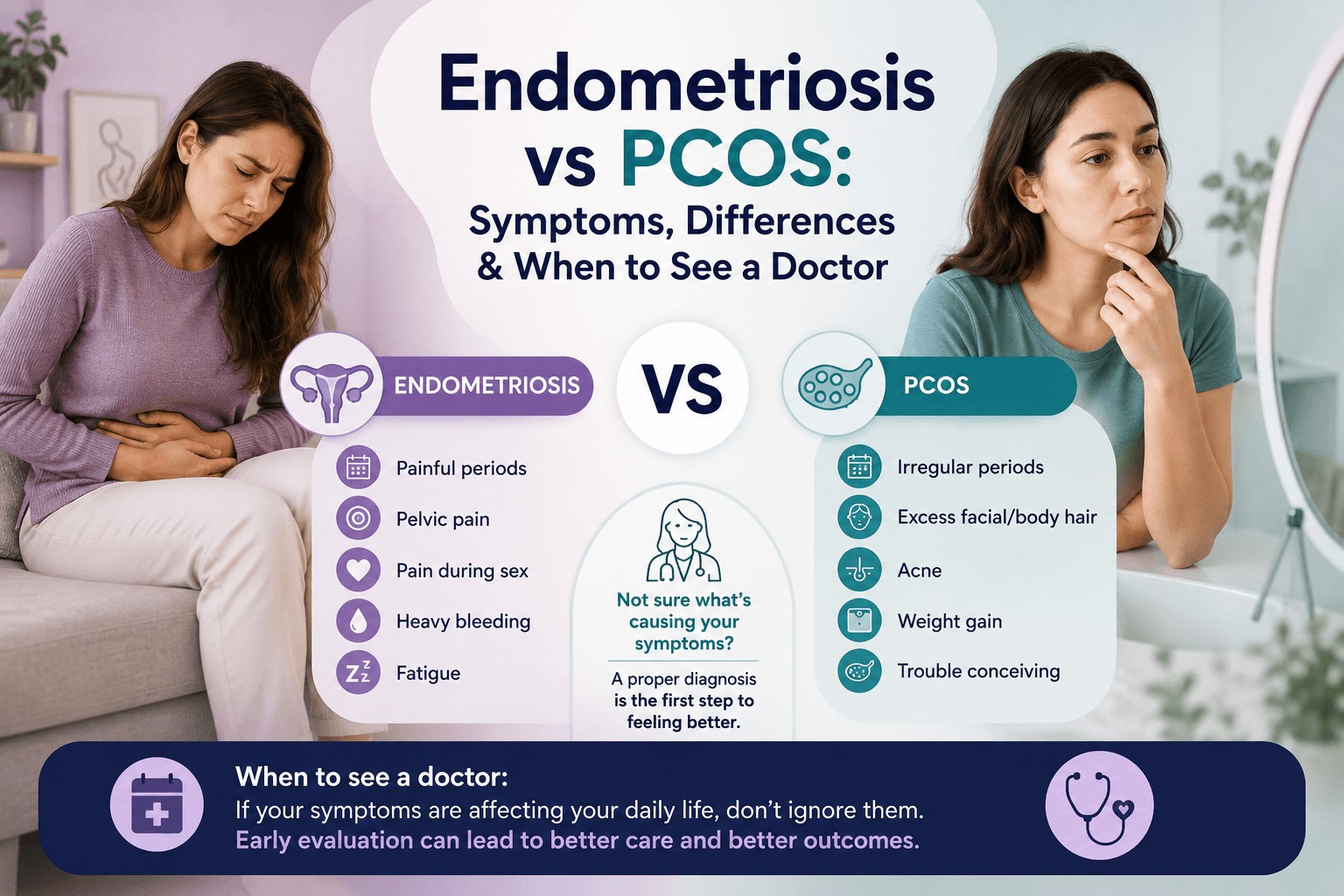
Endometriosis and PCOS can both affect periods, pelvic health, and fertility, but they are different conditions. Endometriosis is often linked with pelvic pain, painful periods, and pain with sex or bowel movements. PCOS, or polycystic ovary syndrome, is a hormone-related condition that often causes irregular periods, acne, excess facial or body hair, and signs of insulin resistance.
Because endometriosis vs PCOS symptoms can overlap, it is important not to self-diagnose. A doctor can review your symptoms, menstrual history, health history, and whether further testing or referral is needed.
North East Medical Clinic in Northeast Calgary provides family medicine and walk-in medical care for non-emergency concerns, including menstrual symptoms, pelvic pain, and women’s health concerns.
What Is Endometriosis?
Endometriosis is a condition where tissue similar to the lining of the uterus grows outside the uterus. This tissue can cause inflammation, pain, scarring, and sometimes fertility concerns.
The most common symptom is pelvic pain, often around the time of a menstrual period. However, symptoms can vary. Some people have severe symptoms, while others may have few or no symptoms.
Common Endometriosis Symptoms
Endometriosis symptoms may include:
- Painful periods that feel worse than typical cramps
- Pelvic pain before, during, or outside your period
- Lower back or lower abdominal pain
- Pain during or after sex
- Pain with bowel movements or urination, especially around your period
- Heavy periods or bleeding between periods
- Bloating, diarrhea, constipation, nausea, or fatigue around menstruation
- Difficulty getting pregnant
Pain severity does not always match the extent of endometriosis. Some people with mild disease may have significant pain, while others may have more advanced disease with fewer symptoms.
What Is PCOS?
PCOS, or polycystic ovary syndrome, is a hormone-related condition that can affect ovulation. It is commonly associated with irregular menstrual cycles and higher-than-expected androgen levels. Androgens are hormones that can contribute to acne, excess hair growth, and scalp hair thinning.
PCOS can also be linked with insulin resistance, which means the body has more difficulty using insulin effectively. This may increase the risk of type 2 diabetes and other metabolic health concerns over time.
Common PCOS Symptoms
PCOS symptoms may include:
- Irregular periods, missed periods, or very long cycles
- Acne, especially persistent acne beyond the teen years
- Excess facial or body hair
- Thinning hair on the scalp
- Weight changes or difficulty managing weight
- Darker, thicker skin patches, often around the neck or skin folds
- Oily skin
- Difficulty getting pregnant due to irregular ovulation
Not everyone with PCOS has ovarian cysts, and not everyone with ovarian cysts has PCOS. A doctor can help interpret symptoms and test results in context.
Endometriosis vs PCOS Symptoms: What Is the Main Difference?
The main difference is that endometriosis is more often associated with pelvic pain, while PCOS is more often associated with irregular ovulation and hormone-related symptoms.
| Symptom or Feature | More Common With Endometriosis | More Common With PCOS |
|---|---|---|
| Severe period pain | Yes | Sometimes |
| Pelvic pain outside periods | Yes | Less typical |
| Pain during sex | Yes | Less typical |
| Pain with bowel movements or urination around periods | Yes | Less typical |
| Irregular or missed periods | Sometimes | Yes |
| Acne | Not typical | Yes |
| Excess facial or body hair | Not typical | Yes |
| Scalp hair thinning | Not typical | Yes |
| Fertility concerns | Possible | Possible |
| Bloating or bowel symptoms around periods | Possible | Less typical |
Can You Have Both Endometriosis and PCOS?
Yes, it is possible to have both conditions. Having symptoms that seem to fit one condition does not rule out the other. For example, someone may have irregular periods and acne from PCOS, while also having severe pelvic pain from endometriosis.
This is one reason a medical assessment is helpful. Your doctor may ask about your cycle pattern, pain timing, bleeding, skin changes, hair growth, weight changes, bowel or bladder symptoms, and pregnancy goals.
How Doctors May Assess Symptoms
A doctor may start with questions about:
- How often your periods occur
- How heavy your bleeding is
- When pain happens during your cycle
- Whether pain affects school, work, sleep, sex, or daily activities
- Acne, hair growth, hair thinning, or weight changes
- Family history of endometriosis, PCOS, diabetes, or other health concerns
- Pregnancy plans or difficulty getting pregnant
Depending on your symptoms, assessment may include a physical exam, blood tests, pelvic ultrasound, pregnancy testing, STI testing, or referral to a gynecologist or specialist. Testing needs vary from person to person.
When to See a Doctor
Consider booking a medical appointment if you have:
- Period pain that regularly interferes with daily life
- Pelvic pain that is worsening or persistent
- Irregular, missed, or very heavy periods
- Bleeding between periods or after sex
- Pain during sex, bowel movements, or urination
- Acne, excess hair growth, or scalp hair thinning with irregular periods
- Difficulty getting pregnant
- Symptoms that are new, changing, or concerning to you
Seek urgent medical care if you have sudden severe pelvic pain, fainting, fever with pelvic pain, very heavy bleeding, shoulder-tip pain, or pelvic pain with a possible pregnancy. These symptoms may need prompt assessment.
How North East Medical Clinic Can Help
If you are in Northeast Calgary and are concerned about endometriosis vs PCOS symptoms, North East Medical Clinic can help with an initial medical assessment for non-emergency concerns. A family doctor or walk-in physician can review your symptoms, discuss appropriate testing, and advise whether follow-up care or referral may be needed.
For emergencies, call 911 or go to the nearest emergency department.
Learn more about women’s health services at North East Medical Clinic.
FAQ
Are endometriosis and PCOS the same thing?
No. Endometriosis involves tissue similar to the uterine lining growing outside the uterus. PCOS is a hormone-related condition that can affect ovulation, periods, skin, hair growth, and metabolic health.
What symptoms suggest endometriosis instead of PCOS?
Severe period pain, pelvic pain, pain during sex, and pain with bowel movements or urination around your period may suggest endometriosis. These symptoms can also have other causes, so medical assessment is important.
What symptoms suggest PCOS instead of endometriosis?
Irregular or missed periods, acne, excess facial or body hair, scalp hair thinning, and signs of insulin resistance may suggest PCOS. A doctor may recommend blood tests or ultrasound depending on your situation.
Can endometriosis or PCOS affect fertility?
Both conditions can be linked with fertility concerns, but many people with endometriosis or PCOS can still become pregnant. If you are trying to conceive or have concerns, speak with a doctor about assessment and next steps.
Should I see a doctor for painful or irregular periods?
Yes, especially if symptoms affect your daily life, are getting worse, or are new for you. Painful or irregular periods are common, but they should not be dismissed when they interfere with your health or routine.