
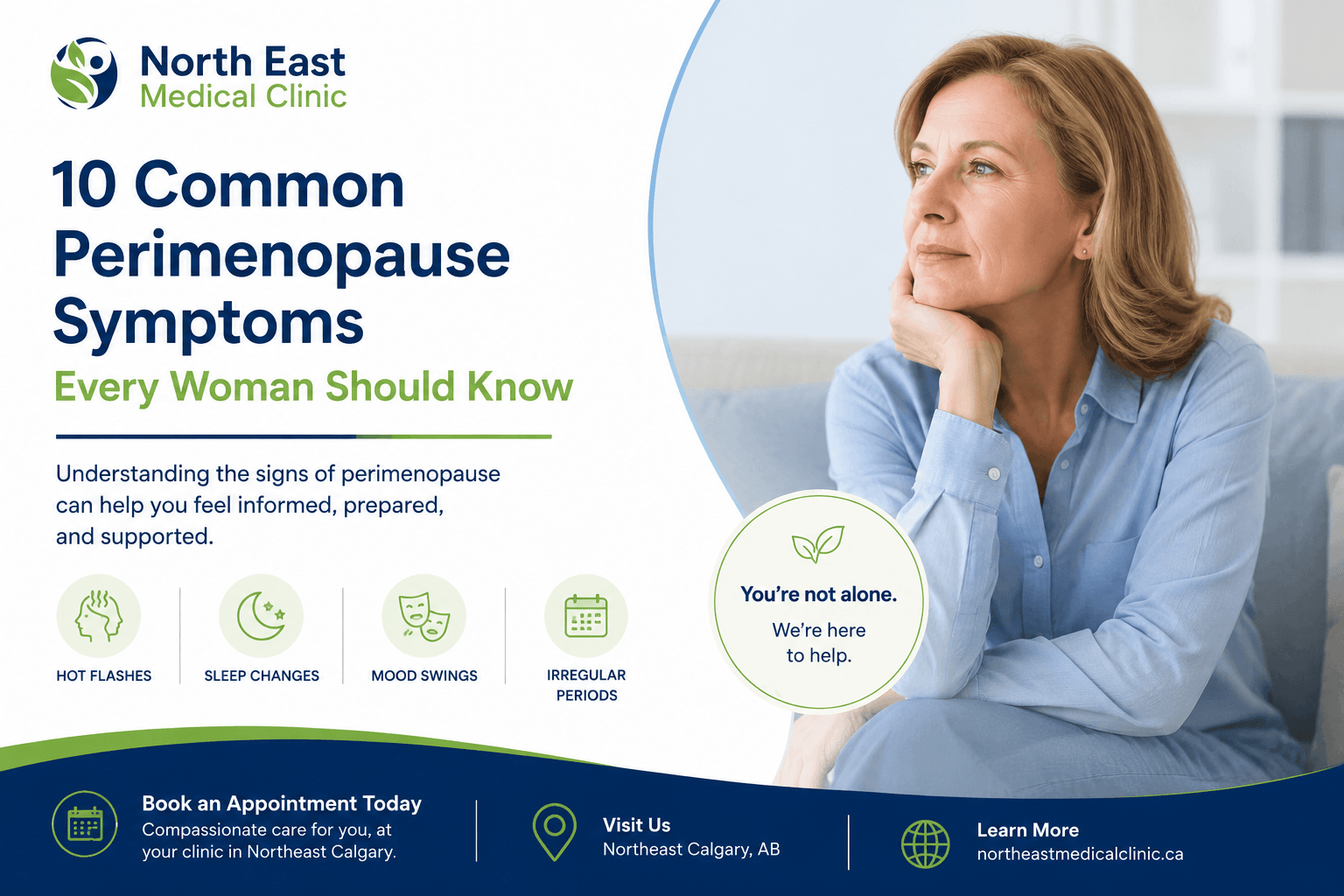
Perimenopause is the transition stage before menopause, when hormone levels can rise and fall unevenly. For many women, this stage begins in the 40s, but symptoms can sometimes start earlier or later. Common perimenopause symptoms may include changes in periods, hot flashes, night sweats, sleep problems, mood changes, vaginal dryness, and changes in energy or concentration.
Perimenopause is not the same for everyone. Some women notice mild changes, while others experience symptoms that affect daily life, sleep, work, or relationships. If symptoms are new, persistent, or concerning, a medical assessment can help rule out other causes and guide next steps.
At North East Medical Clinic in Northeast Calgary, women’s health services include reproductive and hormonal health support, including assessment and medical support for perimenopause and menopause-related symptoms when clinically appropriate.
What Is Perimenopause?
Perimenopause is the natural transition leading up to menopause. Menopause is usually confirmed after 12 consecutive months without a menstrual period, when there is no other medical reason for the change.
During perimenopause, estrogen and other reproductive hormones can fluctuate. These hormone changes may affect menstrual cycles, body temperature, sleep, mood, vaginal and urinary health, and overall well-being.
10 Common Perimenopause Symptoms
1. Irregular Periods
Changes in your menstrual cycle are often one of the first signs of perimenopause. Periods may become shorter, longer, heavier, lighter, closer together, or farther apart.
Occasional skipped periods can happen during perimenopause, but very heavy bleeding, bleeding after sex, bleeding between periods, or bleeding after menopause should be assessed by a healthcare provider.
2. Hot Flashes
Hot flashes are sudden feelings of heat that may affect the face, neck, chest, or upper body. They may be accompanied by sweating, flushing, or a racing heartbeat.
Hot flashes vary widely. Some women have occasional mild episodes, while others find them frequent or disruptive.
3. Night Sweats
Night sweats are hot flashes that happen during sleep. They may cause sweating, waking during the night, or difficulty getting back to sleep.
Because poor sleep can affect mood, focus, and energy, night sweats are worth discussing with a doctor if they are frequent or interfering with daily life.
4. Sleep Problems
Some women have trouble falling asleep, staying asleep, or feeling rested during perimenopause. Sleep issues may be related to night sweats, stress, mood changes, or other health factors.
A healthcare provider can help assess whether sleep changes are related to perimenopause or another issue, such as thyroid concerns, anxiety, medication effects, or sleep apnea.
5. Mood Changes
Perimenopause may be associated with irritability, anxiety, low mood, or feeling less emotionally steady than usual. These symptoms can also be influenced by sleep, stress, life stage, and existing mental health conditions.
Mood changes should not be dismissed. If symptoms feel intense, persistent, or difficult to manage, professional support can help.
6. Brain Fog or Trouble Concentrating
Some women describe “brain fog,” forgetfulness, or difficulty focusing during perimenopause. This can be frustrating, especially when combined with poor sleep or stress.
Brain fog can have several possible causes, so it is helpful to mention it during a medical visit, especially if it is new, worsening, or affecting work or daily routines.
7. Vaginal Dryness or Discomfort
Lower or fluctuating estrogen levels may contribute to vaginal dryness, discomfort during sex, irritation, or changes in vaginal tissue.
These symptoms are common but treatable. A doctor can discuss options based on your health history, symptoms, and preferences.
8. Changes in Libido
Some women notice changes in sexual desire during perimenopause. This may be related to hormone changes, vaginal discomfort, fatigue, stress, mood, relationship factors, or medications.
Because libido is influenced by many factors, care is usually most helpful when it looks at the whole picture rather than assuming one cause.
9. Urinary Changes
Perimenopause and menopause may be associated with urinary urgency, more frequent urination, leaking, or recurrent urinary discomfort. These symptoms can also be caused by infections or other medical conditions.
If urinary symptoms are new, painful, persistent, or recurrent, it is important to seek medical advice.
10. Changes in Energy, Weight, or Body Composition
Some women notice fatigue, changes in weight, or shifts in body composition during midlife. These changes may be influenced by hormones, sleep, activity level, nutrition, stress, thyroid health, medications, or other medical factors.
Rather than assuming all changes are due to perimenopause, a primary care assessment can help identify possible contributors.
When Should You See a Doctor About Perimenopause Symptoms?
Consider booking a medical appointment if symptoms are affecting sleep, mood, work, relationships, sexual health, or quality of life. You should also seek care for heavy or unusual bleeding, pelvic pain, bleeding after menopause, new urinary symptoms, or symptoms that feel unusual for you.
A doctor may review your symptoms, menstrual history, medications, health conditions, and risk factors. Depending on your situation, they may recommend monitoring, lifestyle guidance, lab testing, treatment options, or referral to a specialist.
Perimenopause Support in Northeast Calgary
North East Medical Clinic provides women’s health services in NE Calgary, including support for reproductive and hormonal health concerns. This may include assessment of menstrual cycle irregularities, hormonal symptoms, perimenopause and menopause-related symptoms, preventive screenings, and referrals when appropriate.
Care is based on individual medical needs, physician assessment, and clinical appropriateness. Patients can also visit the clinic’s booking page or main website at northeastmedicalclinic.ca for appointment information.
FAQ
What are the most common perimenopause symptoms?
Common perimenopause symptoms include irregular periods, hot flashes, night sweats, sleep problems, mood changes, brain fog, vaginal dryness, libido changes, urinary changes, and fatigue.
How do I know if I am in perimenopause?
Perimenopause is often assessed based on age, symptoms, and menstrual cycle changes. A healthcare provider can help rule out other possible causes, especially if symptoms are new, severe, or unusual.
Can perimenopause symptoms start before periods change?
Yes. Some women may notice symptoms such as hot flashes, sleep changes, or mood changes before their menstrual cycle becomes noticeably irregular.
Should I see a doctor for perimenopause symptoms?
You should consider seeing a doctor if symptoms are affecting your daily life, sleep, mood, sexual health, or if you have heavy, unusual, or post-menopausal bleeding.
Does North East Medical Clinic help with perimenopause symptoms?
Yes. North East Medical Clinic’s women’s health services include reproductive and hormonal health support, including perimenopause and menopause-related symptoms when clinically appropriate.
Compliance Notes
This draft uses cautious, evidence-aware language and avoids guaranteed outcomes or treatment promises. Clinic-specific claims are limited to services listed on North East Medical Clinic’s women’s health page. Medical details should be reviewed by a qualified healthcare professional before publication.
Sources Used
SOGC Menopause Hub: https://sogc.org/en/en/content/events/HUB-Pages/Menopause.aspx
MyHealth Alberta: https://myhealth.alberta.ca/Health/pages/conditions.aspx?hwid=hw228763
HealthLink BC: https://www.healthlinkbc.ca/healthwise/hot-flashes-and-menopause